|
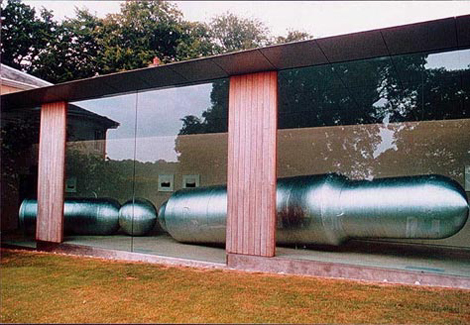
Daphne Wright, "These Talking Walls", 2001
Dumb Sands' Deportment
Appetites for the consolations of the future are often mean. And, whether it's for bleak misery or some psalm-shod new heaven, the craving articulates an ache to control. Pouting futurologies may offer trinket promises of influence, or herald calamity. Either way, for art their theatre is a syllogistic one. Predicting the worsening of the bad and the improvement of the underwritten, they exercise a selective eye, marshalling worlds of partial gesture toward the ends of their own case.
They hold mesmerises, but their collected brilliance is choleric and frustrating. Committed to hurried violence and granting only paltry presecience to the reputations of artworks, futures make for fretfulness. It's like a tinkling or a whining that is unplaceable, distracting, wholly attractive and entirely demeaning. Even so, flatulent, and trivially fixed on their own romantic heartbeats, such futures are not negligible. Their capital is prestige, and they sequin themselves in its interest.
Is an aesthetics or politics of prediction possible, then, carrying such a belly full of rubble? There is dignity and virtue in waiting. Even hesitation would help, something to bring timely syncopation to the clattering of ill-construed history. And unevenness and uncertainty, too. Some work makes itself available to predictive architectures. Ever so, maybe. But, where it doesn't know how to behave like a foil to vain assumption, art, some art, has its own soft possession over what is to come.
It is often unlikely though. And, discouraging for curators. Precisely not for a coyness or bombast, but rather a kind of self-regarding modesty. Exhausted by levity and the expensive cultivation of singular reputes, such work draws its hems politely away from malicious offers of fixed future security. In 1999, asked to make a millenial statement, Nick Crowe, produced this vision of blissful, sleepy flight http://www.nickcrowe.net/y2k/ . Similarly asked, Daphne Wright made this low-fi reflection of aerospace (above).
For each, momentary images of irresistible invasion have flashed through the cellars of what they could allude to. Both have been rebuked, one calumniously so. But, by taking care not to be instructional, these works have risked opening themselves out to changeable fidelities and compassions. Ushering by the callow significances of modish emergence, these works have chosen to articulate a wager with uncallable futures, themselves as the stake. In time, they are graceful.
Robert Stone
London
|
|
|
